

B2B lead generation works better when you know which businesses you can help and why they might need you. A large list of addresses gives you volume, but it does not tell you whether the companies fit your offer or welcome your message.
Start with a small, researched prospect group and a clear reason to contact each business. The goal is a useful conversation with a suitable buyer.
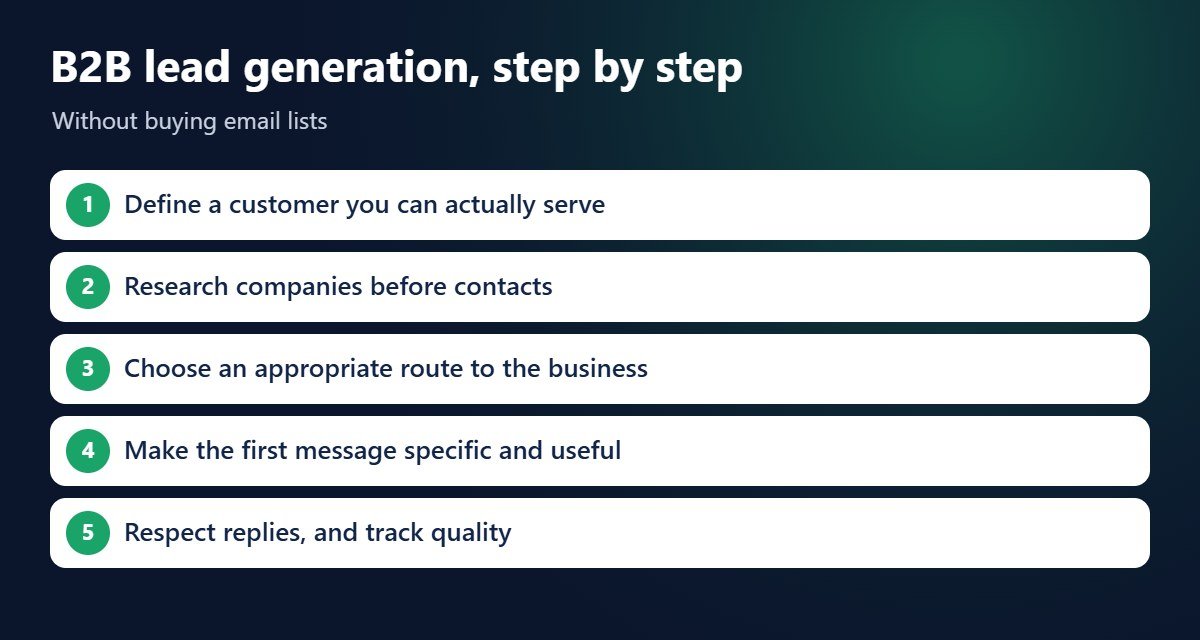
B2B lead generation starts with a customer you can serve
Write down the industry, location, company size and business problem that fit your service. Include the signs that a company is unsuitable, such as an unsupported location or a project outside your skills.
For example, a website provider might focus on independent retailers with outdated product information and a reachable owner. This is more actionable than targeting “all businesses.”
Research companies before contacts
Use relevant business websites, directories, industry events and professional networks to build a shortlist. Record the company, source, reason for fit and date checked. Look for a real business need rather than inventing a problem to justify a sales message.
A useful first batch could be a small group you can review manually. The right number is one your team can research and follow up thoughtfully, not an arbitrary target of thousands.
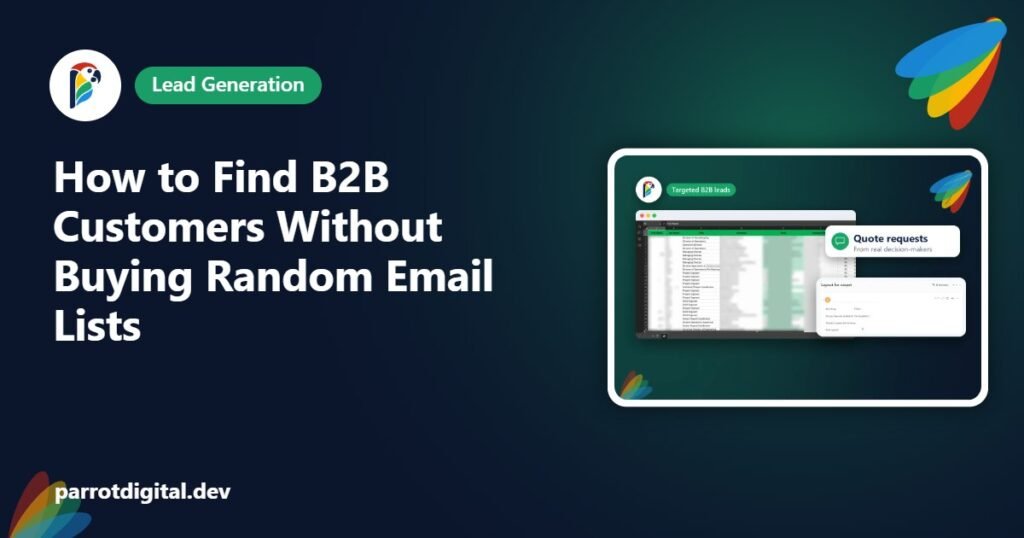
In one B2B lead generation project of ours, we researched directors of operations, managing directors, chief engineers and project engineers across hospitality, real estate and engineering, and grouped them by industry and priority. Personal emails and timely follow-ups then brought replies with project details and requests for quotations. We built the list by researching each company rather than buying one.
Choose an appropriate route to the business
Check how the company invites relevant business enquiries. A public sales address, supplier form, professional introduction or event conversation may be more appropriate than guessing a personal email address.
Do not assume that a published address gives permission for every marketing use. Match your process to the applicable rules and the recipient’s expectations, and get qualified guidance where your campaign needs it.
B2B lead generation outreach: make the first message specific
Explain who you are, why the business seems relevant and what small next step you are proposing. Keep claims factual. If you have reviewed only the public website, do not imply that you have inspected private analytics or uncovered a confirmed security issue.
An illustrative approach is: “I noticed your store’s website lists product ranges but gives customers no clear quotation route. We build retail enquiry pages. Would a short outline be useful?” Adapt the message to a genuine observation rather than sending the same invented detail to everyone.
Build inbound paths too
Publish a clear service page, relevant case studies and useful answers to buying questions. Ask satisfied clients whether they know another business facing the same problem. Partnerships with complementary providers can also produce introductions with better context.
These channels take work, but they give prospects a way to assess you before a call. Your outreach should point to evidence that matches the specific offer.
Respect replies and opt-outs
Keep follow-up limited and relevant. Stop when someone declines or asks not to be contacted. Maintain an exclusion record so a later list does not restart the same unwanted conversation.
If you use email, work with your provider to meet authentication and sending requirements. Google’s email sender guidelines explain delivery-related expectations. Delivery settings do not replace the need to respect recipients and applicable marketing rules.
Measure B2B lead generation through the sales process
- Companies researched and accepted as a fit.
- Relevant conversations and useful replies.
- Qualified opportunities with a defined need.
- Proposals requested and deals won.
- Reasons prospects decline or do not fit.
Review the process before increasing volume. If replies show the wrong audience, improve targeting. If people show interest but do not progress, check the offer, proof and next step.
Frequently asked questions
Is a researched lead the same as a customer?
No. It is a potential fit. Need, timing, authority and budget still have to be established.
Can I automate everything?
Tools can organize work, but research quality, message accuracy and response handling still need oversight.
Build a focused B2B lead generation process
Parrot Digital provides B2B lead generation support. Discuss your target market with us.